- Licensed security installer, Epping VIC
- Open 7:30am to 6pm

Menu
- Licensed security installer, Epping VIC
- Open 7:30am to 6pm
The short answer
In Victoria you can put security cameras on your own property. The main law is the Surveillance Devices Act 1999, which limits recording private conversations and private activities. This guide covers what that means at home and at work. It is general information, not legal advice.
Last checked against the Act and the regulators’ pages on 21 November 2026.
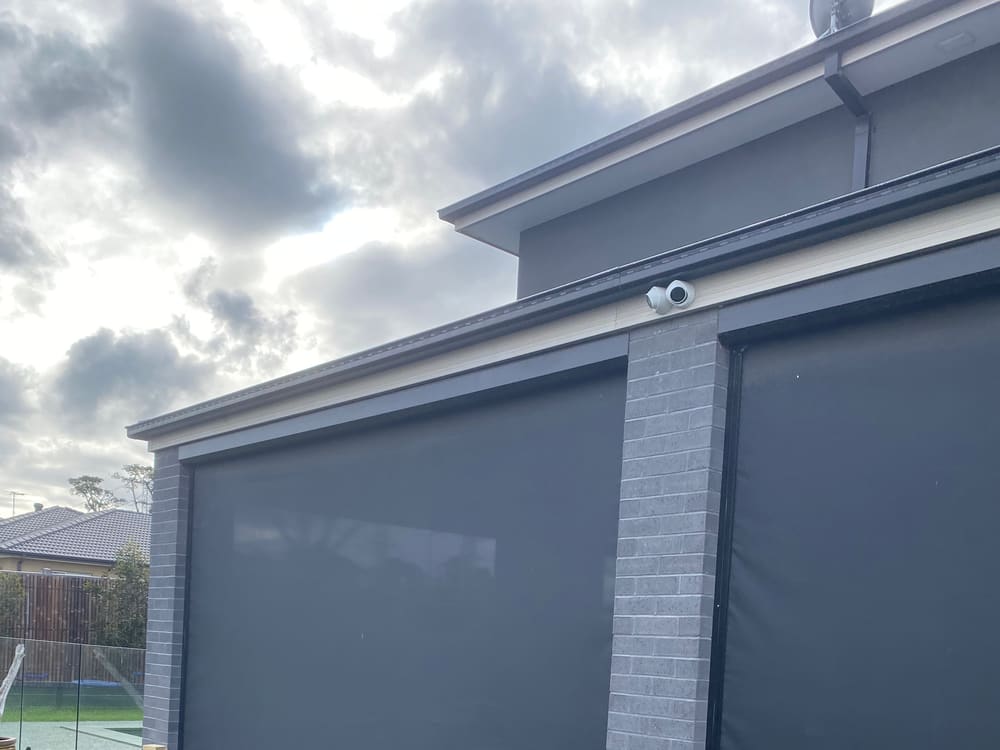
You can
On your own property
Take care
What can break the law
If you are planning a system, our page on home CCTV installation explains what goes in and what it costs.
Surveillance Devices Act 1999 (Vic)
Victoria’s main law for security cameras. It limits recording private activities and private conversations. The main offences carry up to 2 years in prison or 240 penalty units, or both, for a person, and 1200 penalty units for a company. Read it at Victorian legislation.
Privacy Act 1988 (Cth)
Generally covers organisations with an annual turnover of more than $3 million, plus some smaller businesses such as private health service providers. It does not cover a security camera run by an individual acting in a private capacity. The Office of the Australian Information Commissioner has guidance on security cameras.
Every situation differs. Laws change, and this guide can only give the general rules. Talk to a lawyer about your own.
The Act does not stop you filming the outdoor parts of your own property, such as your front yard, driveway and backyard.
Victoria Police advises covering all entry and exit points, your driveway and the street in front of your house, and avoiding angles that capture a neighbour’s property. It also says to make cameras visible and not to use fakes.
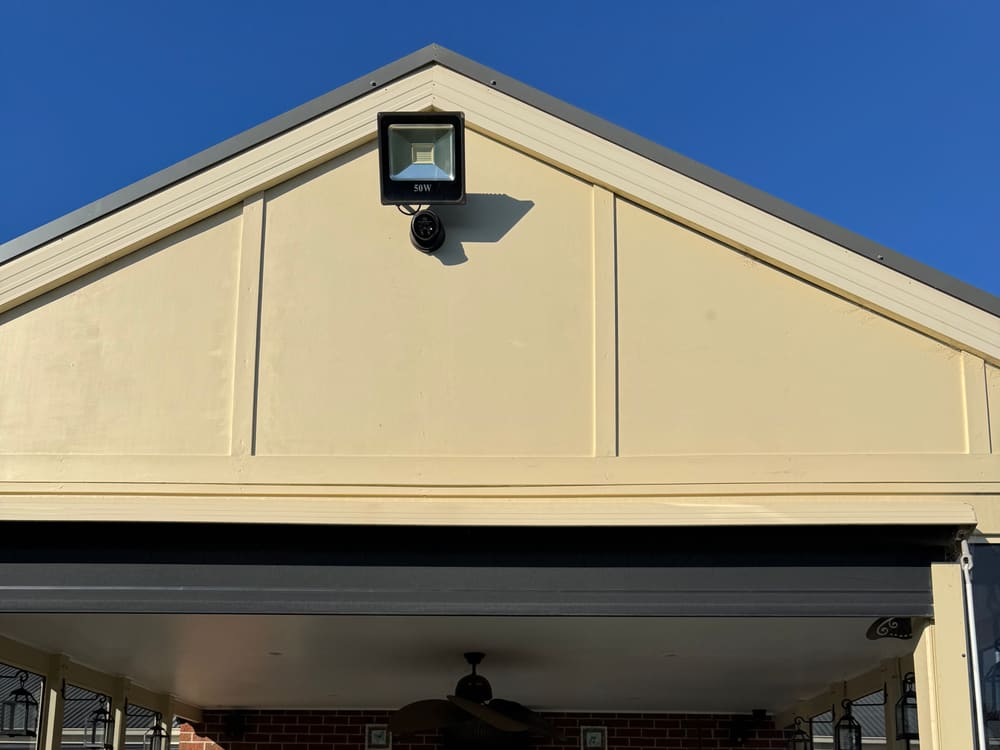
The Act does not ban a camera from filming outdoor areas, including a neighbour’s yard, but laws on stalking and serious invasions of privacy can still apply. A camera that can see inside someone’s home, for example through a window, can break the Act. If a neighbour’s camera worries you, take these steps.
1
Talk to your neighbour
Start here, if it is safe.
2
Try free mediation
The Dispute Settlement Centre of Victoria offers free help with neighbour disputes, including privacy, on 1300 372 888. Mediation is voluntary, and the Centre cannot enforce an agreement.
3
Contact police if it is serious
Keeping someone under surveillance can be part of the crime of stalking. If you are in danger, call Triple Zero (000).
If it is your camera. Turn it, or use privacy masking, a setting that blocks part of the picture so it is not recorded.
Sound has a stricter rule than video. A camera with a microphone counts as a listening device under the Act.
Video
Outdoor activity is not covered
Something that happens outside a building is not a “private activity” under the Act.
Sound
Covered indoors and outdoors
Recording a private conversation you are not part of, without the consent of everyone in it, is an offence wherever it happens.
The simple fix. If you don’t need sound, turn the microphone off in the camera’s settings. Don’t count on a sign to make it lawful. Nothing in the Act says it does.
Employers must not use cameras or listening devices to watch or record workers in toilets, washrooms, change rooms or lactation rooms. Under the Act, a washroom includes a room with a bath or shower.
New workplace surveillance laws have been promised in Victoria, but they were not law on 21 November 2026. For a shop, office or warehouse, see our page on commercial security systems.

The Surveillance Devices Act does not require a sign, and Victoria Police says there is no requirement in Victoria to display one.
| Where | What applies |
|---|---|
| A home | Not required. Victoria Police says to keep cameras visible. |
| Any business | Victoria Police recommends a sign. |
| A business the Privacy Act covers | Must tell people their image may be captured before they are recorded. |
| A venue whose liquor licence requires cameras | Must put up signs for customers and staff. |
How long it lasts
A home recorder usually keeps 10 to 20 days. See how long CCTV keeps footage. A venue whose liquor licence requires cameras must keep recordings for at least 4 weeks.
Handing it to police
For a non-urgent report, contact Victoria Police online or on 131 444 and say you have footage. Crime Stoppers takes anonymous reports on 1800 333 000.
Before you post it
Passing on or publishing a recording of a private conversation or private activity is an offence unless an exception applies, such as consent. Victoria Legal Aid says you can defame a person without naming them and without meaning to cause harm.
The Surveillance Devices Act does not ban a camera from filming an outdoor area such as your yard. Recording your private conversations without consent is an offence. Stalking laws can still apply, and since 10 June 2025 Commonwealth law has let a person sue over a serious invasion of privacy.
No. The Surveillance Devices Act does not require a sign, and Victoria Police says there is no requirement in Victoria to display one. Victoria Police does advise making cameras visible and not using fake ones.
The Surveillance Devices Act does not set a maximum number of cameras for a home. What matters is where they point and whether they record sound. Our guide on how many security cameras a house needs helps you count them.
Tell us the suburb and what you need, and we’ll get back to you with a price.
Tell us where you are and what you need. Photos help if you have them.
We only use your details to reply about your quote. Read our privacy policy.